Robert Duvall Net Worth: How Much Was He Really Worth?
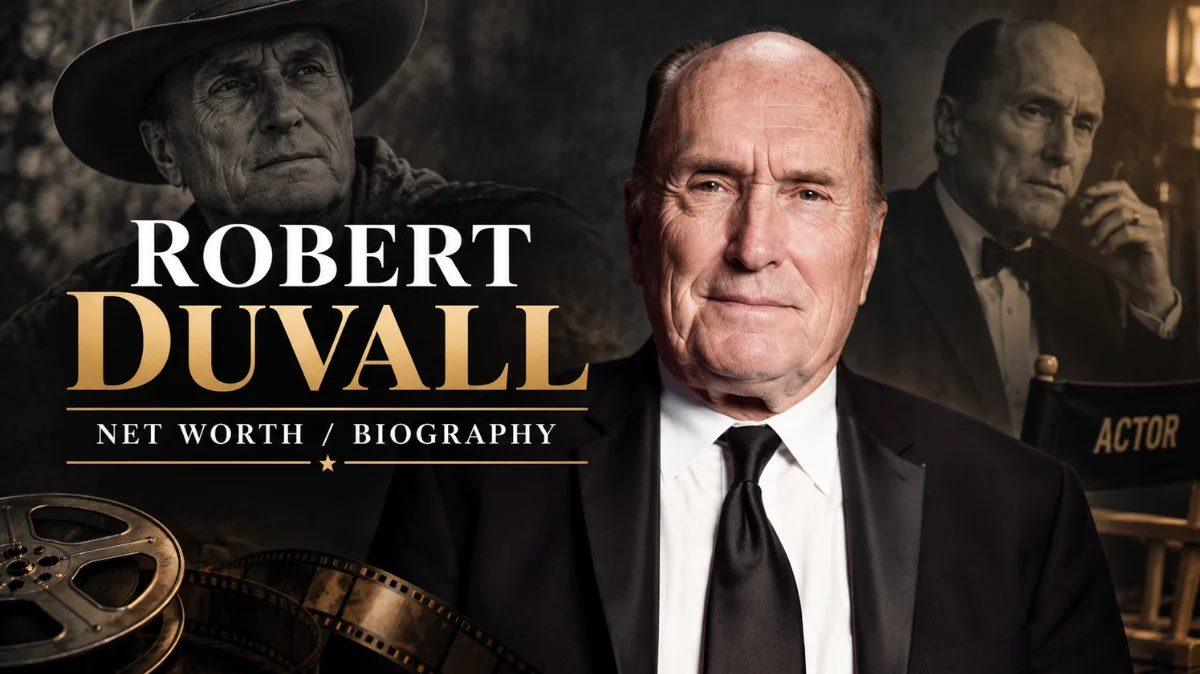
Robert Duvall spent seven decades disappearing into his roles, from a silent neighbor in To Kill a Mockingbird to the calm consigliere in The Godfather. He never chased franchises or flashy fame. He built his career on craft, and that choice shaped his finances as well. The Robert Duvall net worth is estimated at $50 million to $70 million, and this guide explains where that money came from.
Robert Duvall Net Worth at a Glance
| Detail | Information |
| Full Name | Robert Selden Duvall |
| Estimated Net Worth | $50 million to $70 million |
| Born | January 5, 1931, San Diego, California |
| Died | February 15, 2026, at age 95 |
| Height | 5 ft 9 in |
| Nationality | American |
| Professions | Actor, director, producer, screenwriter, television producer |
| Main Income Sources | Acting salaries, producing, profit participation, royalties, real estate |
Early Life and Navy Family Roots
Robert Duvall was born in San Diego, California, to William Howard Duvall, a career naval officer who rose to the rank of rear admiral, and Mildred Virginia, who had a background in acting and theater. His mother’s love of performance helped steer him toward the stage.
His father’s Navy career kept the family on the move, which sharpened his ear for regional accents and human behavior. He later attended Principia College in Illinois, where he began to take acting seriously, and then served in the U.S. Army during the Korean War era.
Training in New York and Early Stage Work
In 1955, Duvall moved to New York City to study under acting teacher Sanford Meisner at the Neighborhood Playhouse. There he formed lasting friendships with young actors Dustin Hoffman and Gene Hackman. While he auditioned, he paid his bills by working at a post office.
His early career was built on the stage, where he developed a disciplined approach to the craft. He also appeared on television in Playhouse 90, Naked City, and Alfred Hitchcock Presents. His film debut came in 1962 as Boo Radley in To Kill a Mockingbird, a small and mostly silent part that still left a strong impression on audiences.
The Godfather Breakthrough
His real breakthrough arrived in 1972, when he played Tom Hagen, the calm and calculating consigliere, in The Godfather. The role earned him his first Academy Award nomination and made him a recognizable name in Hollywood. He returned to the part two years later in The Godfather Part II.
Defining Roles of the 1970s and 1980s
The 1970s became a defining decade for him. He appeared in Network and The Great Santini, and the latter earned him another Oscar nomination. In 1979 he delivered one of his most iconic performances as Lt. Col. Bill Kilgore in Apocalypse Now, including the famous line about the smell of napalm in the morning.
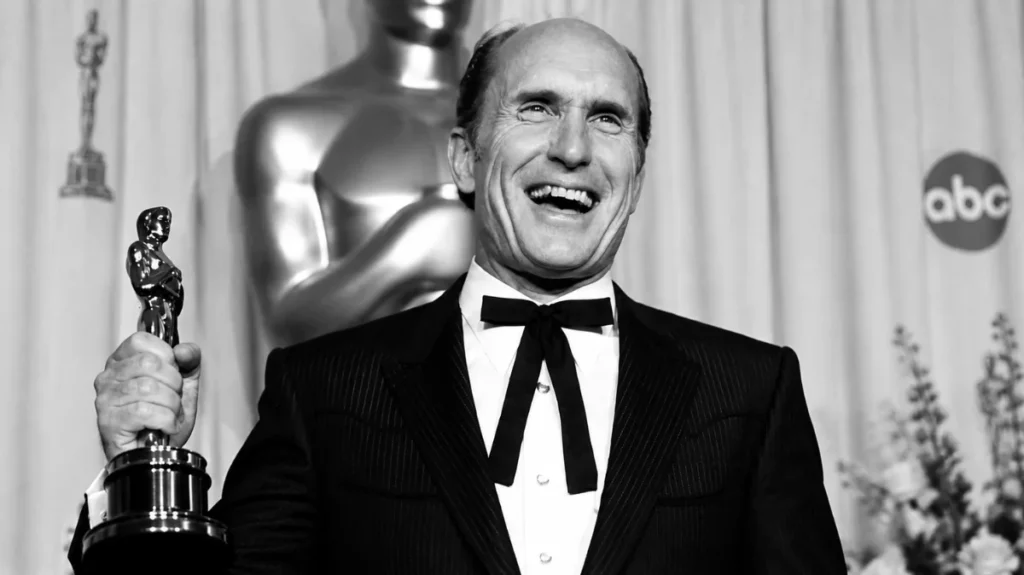
In 1983, he won the Academy Award for Best Actor for Tender Mercies, playing a broken country singer searching for redemption. He later wrote, directed, produced, and starred in The Apostle, a passion project about a troubled preacher, which earned yet another Oscar nomination.
Directors who give actors room to shape a project, the way Francis Ford Coppola did for Duvall, have always been central to great careers, and the Spike Lee net worth story shows how a filmmaker can build lasting wealth by owning his work as well as directing it.
Lonesome Dove and Later Career
On television, Duvall starred as Augustus McCrae in the 1989 miniseries Lonesome Dove, a role he called his personal favorite. He later won an Emmy for the Western miniseries Broken Trail. He kept working into his later years in films such as Deep Impact, Crazy Heart, The Judge, and Widows, and he earned an Oscar nomination for The Judge at age 84.
Awards and Honors
Robert Duvall received seven Academy Award nominations and one win, for Tender Mercies. He also collected multiple Golden Globe and Emmy nominations and wins, including recognition for Lonesome Dove and Broken Trail.
How Robert Duvall Built His Fortune
His wealth grew over decades through acting salaries, film deals, royalties, and producing ventures. Estimates vary by source, with most reports placing his fortune near $50 million and some reaching as high as $70 million. The table below shows the key money moments in his career.
| Item | Details |
| The Godfather (1972) salary | Reported at $36,000 |
| The Godfather Part II salary | Reported at $500,000 |
| The Godfather Part III offer | Reported at $1 million, which he turned down |
| Reason for turning it down | He felt the offer was too low compared with what Al Pacino was offered |
| Production company | Butcher’s Run Films, founded in 1992 |
| Directing and producing | Ownership stakes in projects he wrote and directed, including The Apostle |
| Additional income | Profit participation deals, residuals, and streaming royalties |
His decision to walk away from The Godfather Part III shows how highly he valued his work. He also earned far more from ownership stakes and royalties than from salary alone, which is why his income stayed strong late in his career. Actors who combine acting with ownership have built some of the biggest fortunes in Hollywood, and the George Clooney net worth breakdown is a good example of how producing and business ventures can outgrow a salary.
Butcher’s Run and Byrnley Farm
Duvall had deep ties to Virginia horse country. In July 1985, he bought a 28-acre estate near Philomont, Virginia, called Butcher’s Run, which included a farmhouse built in the 1820s. He owned it for more than two decades and sold it in 2009 for $2.265 million.
In 1994, he bought his main home, Byrnley Farm, a 361-acre estate in The Plains, Virginia, for $3.65 million. The property dates back more than 250 years and features a Georgian-style farmhouse with gabled roofs and wide plank pine floors. After his wife Luciana Pedraza joined his life, she redesigned the interiors with French country antiques and Ralph Lauren-inspired textiles, and the couple converted a barn on the property into a tango dance hall.
Byrnley Farm also held an editing annex where he worked on projects such as The Apostle. He lived there until his death in February 2026.
Marriages and Family Life
Duvall was married four times and had no children. His first marriage was to former dancer Barbara Benjamin, from 1964 to 1975. His second was to actress and producer Gail Youngs, from 1982 to 1986, and his third was to dancer Sharon Brophy, from 1991 to 1995.
In 2005, he married Luciana Pedraza, who was 41 years younger. They met in the mid 1990s on a trip to Argentina to study tango. His love of the dance was genuine, and he produced, directed, and starred in the film Assassination Tango alongside her. They stayed married until his death.
Charity Work
In 2001, Duvall and Pedraza created the Robert Duvall Children’s Fund, a charity that supports underprivileged children and families in Northern Argentina through education and medical services. They also supported Pro Mujer, a nonprofit that helps poor women across Latin America.
FAQs
How did Robert Duvall make his money?
He made his money through decades of acting in film and television, along with directing, producing, profit-sharing deals, and real estate investments in Virginia.
What was Robert Duvall’s net worth when he died?
His net worth at the time of his death in February 2026 is estimated at around $50 million to $70 million.
What is Robert Duvall famous for?
He is famous for roles including Tom Hagen in The Godfather, Lt. Col. Kilgore in Apocalypse Now, and his Oscar-winning performance in Tender Mercies.
Did Robert Duvall have children?
No. He had no children, despite being married four times.
Where did Robert Duvall live?
His main home was Byrnley Farm, a 361 acre estate in The Plains, Virginia, which he owned from 1994 until his death in 2026.
Final Thoughts on the Robert Duvall Net Worth
Robert Duvall built one of the most respected acting careers in American film history. While reports vary slightly, the Robert Duvall net worth is estimated at $50 million to $70 million, built through legendary performances, smart producing deals, and a deep love for his Virginia farm. His work in The Godfather and Apocalypse Now will keep influencing actors and filmmakers for generations.